Science Coach Academy

Science Coach Academy
June 22-25, 2026

Science Coach Academy

Where Research Teachers Go to Learn

Science Coach Academy is an annual, immersive professional development experience designed for middle and high school research teachers. Each summer, you’ll deepen your science content knowledge, sharpen your mentoring skills, and leave with practical tools to guide students through year-long research projects and competitions.

Registration for 2026 is now closed.

  • Dates: June 22–25, 2026
  • Location: University of Saint Mary, Leavenworth, Kansas
  • Cost: $800 – Meals and housing are included in the conference price.

Science Coach Academy Sessions

Go Outside will inspire teachers to inspire students to conduct outdoor-based science research. This class will highlight award-winning nature-based high school science research projects. During our time together, we will go over nature-based activities and labs that can be conducted outside, including Geese Peace, lichen labs, seed stratification, choice chambers, and the Satan of all plants – invasive bush honeysuckle. We will be going outside for much of the time.

FrogWatch USA is a long-standing community science program that engages volunteers in monitoring frog and toad populations through call surveys. In this training, participants will complete the FrogWatch training and learn monitoring protocols, practice identifying local frog and toad calls, and explore the ecological importance of amphibians and wetlands. This session will also highlight opportunities to strengthen connections between FrogWatch and local classrooms by discussing strategies for incorporating amphibian monitoring into school-based learning. Participants will also hear early ideas for developing an NGSS-aligned curriculum to complement the training and community science project, with the goal of expanding student engagement in meaningful, field-based science and stewardship. The training will also provide guidance on how to connect with a local FrogWatch chapter or on the steps needed to start one in their own community.

This presentation introduces educators to the tools and techniques used in aquatic research. We’ll explore essential sampling equipment, walk through field-collection protocols for gathering aquatic samples, and examine a variety of study-design options that can be adapted for classroom or student-led investigations. In addition, we will highlight helpful online resources for locating sampling sites and accessing historical data, empowering teachers to bring real-world science experiences into their classrooms.

Monarch butterflies are one of the most recognizable insects in North America. Monarchs have captured the attention of children and adults with their fascinating life cycle and incredible long-distance migration. Learn about monarch biology and conservation, and the contributions of community scientists to monarch science. Gather ideas on how monarchs can be incorporated into the classroom and student research projects, including research questions and where to find resources.


Learn about the impact Engineering Tomorrow virtual labs can have in your classroom! Our 20+ STEM labs are developed by engineers and modeled on the cutting-edge work of experts in the field. During each lab, high school students have the opportunity to work with professional engineers and college engineering students via video conferencing. Students gain powerful insights into the impactful work engineers perform daily. Engineering Tomorrow employs students from the nation’s top colleges and universities to mentor high school students and to work alongside engineers to develop and enhance our curriculum. With support from engineers, we deliver our STEM labs at no cost and provide all materials. Participants in this session will have the opportunity to learn about Engineering Tomorrow, interact with Zoom lab hosts, see an introductory session, view lab materials, and have their questions answered.

Insects are wonderful models for environmental science, biology, behavior, engineering, and more! This presentation will explore how insects can be used to engage students across interests.

Join staff from the Missouri Botanical Garden for a hands-on session exploring the complex nature of sustainability in schools. Sustainability is always evolving, with new challenges and solutions emerging every year. To help students make the best sustainable choices to address our most pressing environmental issues, students need to be empowered to use a data-oriented lens to assess problems and solutions. In this session, learn how to transform your school building into a living sustainability lab that gives students the opportunity to audit and benchmark their school’s waste, stormwater, and energy. With critical thinking and problem-solving skills, you can help empower students to use that data to make the best decisions for people, the planet, and our joint prosperity.

Microalgae are cheap, fast-growing, and scientifically rich — and most classrooms aren’t using them. Join Matthew Huber of Algae Research and Supply for a hands-on look at how algae-based experiments can power student research projects from introductory labs all the way to science fair and AP coursework.

Even the best scientific research can be overlooked if it is not communicated effectively. This session will provide practical strategies to ensure that students’ hard work and research are presented in a clear, engaging, and professional manner. Participants will learn key principles of effective oral presentation design, including organization, flow, slide formatting, visual communication, and delivery techniques. Emphasis will be placed on creating compelling slideshow presentations that effectively showcase scientific research while maintaining audience engagement.

This session is for all the science fair teachers and research teachers who mentor students in planning and designing original experiments. Communicating the data from those research projects is an all-important skill and one that relies heavily on the visual vocabulary of graphs. This session will present tips to help students get the most out of their data and do better science. DataClassroom Co-founder Dr. Aaron Reedy will cover how to teach students the key rules of Tidy Data, how to use statistics to build confidence in conclusions, and how to create intentional graphs for a science fair.

This session will examine the often-overlooked STEM discipline of psychological research. We will discuss the conceptual underpinnings of psychological science, how to develop psychologically oriented research questions, and survey common research methodologies suitable for answering them.

Visit the Innovation Studio at the UMKC School of Science and Engineering to explore multiple 3D printing technologies. Learn about different applications, ways to produce templates, different filaments, etc.

Tour the Linda Hall Library at the University of Missouri-Kansas City, one of the world’s leading independent science research libraries. View their collections and special exhibits, and learn how students can access publications, datasets, etc.

Jessica Mohlman from the National Great Rivers Research and Education Center will train participants in data collection related to river systems.

This workshop provides useful resources for STEM educators on implementing AI tools effectively and safely. It covers what AI is good at (speeding up literature reviews, writing, and data analysis), what to watch out for (errors, bias, and hallucinations), and how to protect sensitive data. Participants explore popular tools such as Semantic Scholar, Claude, and NotebookLM and learn practical guidelines for documenting AI use, respecting privacy, and maintaining academic integrity. In this training, attendees will also have a chance to discover the latest research articles related to their field of interest and learn how to mine and extract critical information for use.

Introduction to the power grid and how wind turbine design can impact energy generation.

This session will introduce participants to ecotoxicology, with a focus on aquatic ecotoxicology. Participants will learn the basics of conducting toxicology tests with Daphnia magna, an aquatic microcrustacean commonly used as a model organism in ecotoxicological testing.

Science fair judges consistently reward students who can do more than collect data—they want to see thoughtful analysis, clear visualizations, and sound reasoning about variability and uncertainty. In this session, Dr. Aaron Reedy, DataClassroom co-founder and CEO, will show mentors how DataClassroom helps students move from messy spreadsheets to tidy data to publication-quality graphs and statistics without getting lost in complicated software. We’ll walk through how to tidy data, import student data, choose the right graph type, compare groups, and interpret results, so you can guide students toward projects that stand out. Bring a laptop and leave with concrete strategies you can use with your students this season.

This is an interactive lecture series focusing on techniques involved in studying plant-bacterial interactions. Participants will first have the opportunity to participate in demonstrations focused on developing sterile techniques for culturing the soil bacterium Sinorhizobium meliloti. This will be followed by a demonstration of root nodule dissection and a discussion of how bacteria improve plant growth. Throughout will be lessons on proper sterile procedures, experimental design considerations, the importance of biological nitrogen fixation in agriculture, and how to implement newfound knowledge to students.

Optimize your students’ research by learning a criteria-based framework for selecting appropriate model organisms. Participants will engage with a collaborative, editable database featuring common high school research models and contribute their own successful project experiences. All attendees will receive this dynamic database as a valuable resource to help guide current and future students in designing meaningful scientific research projects. This session provides actionable strategies and solid next steps for all research sponsors, regardless of experience level.

The presenter will discuss the role of 3D printing among other manufacturing methods, the types of 3D printing (with a focus on FDM, SLA, SLS, and PolyJet), the limitations of each technique, and when to use each.

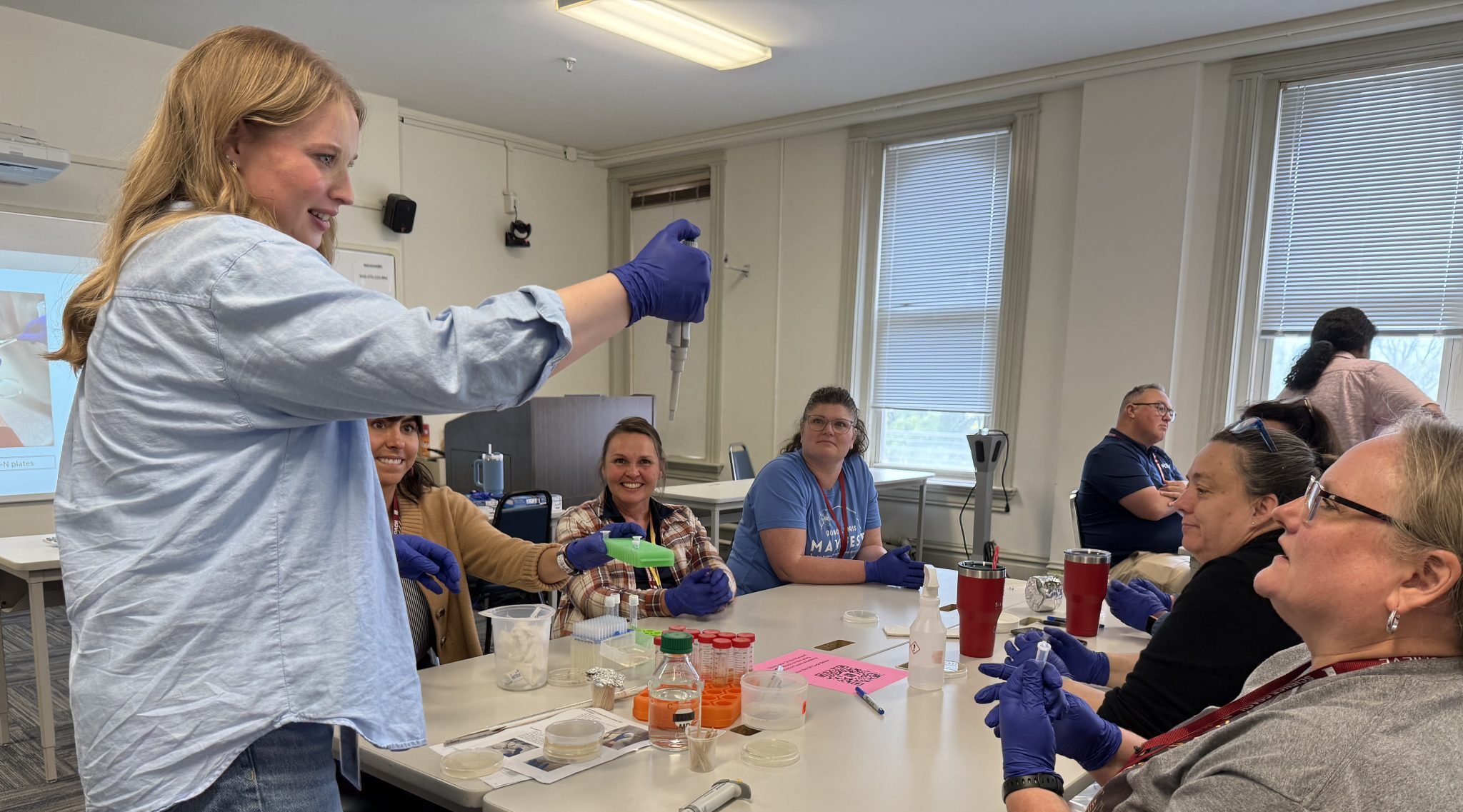
This program introduces essential microbiology lab skills for high school classrooms. Teachers will learn biosafety principles and practice techniques such as aseptic transfer, plating, staining, and quantification methods. The focus is on the safe, practical implementation of techniques that enable hands-on microbiology projects in classrooms. We will be performing introductory techniques for handling bacterial cultures and reviewing safety protocols for their handling and disposal.

This session will expose educators to the connection between the NGSS 3D learning model and the Next Generation Science Standards and to success in State and National Assessments through Science Fair Research projects.

This presentation focuses on strategies to promote a student research program and build sustained buy-in from administrators, colleagues, students, and the community.

This session will review examples of graphs, both good and bad, and will provide resources for teachers to use with students to support data interpretation.

Whether you are new to Science Coach or looking to deepen your implementation, this session provides a comprehensive overview of the curriculum, tools, and resources available to support student research and authentic science learning. Participants will explore the structure and progression of the Science Coach curriculum, learn how to effectively utilize lesson materials and student supports, and discover strategies for integrating research experiences into their classroom. Attendees will leave with practical guidance, resource recommendations, and increased confidence in leveraging Science Coach materials to engage students in meaningful scientific inquiry throughout the year.

Six experienced Science Coach teachers share their insights, ideas, best practices, and tips on classroom and research projects. 

Academy attendees can participate in small-group discussions on pressing topics; and also have the opportunity to ask questions and seek assistance.

Science Coach Academy Presenters

  • Kristen Baum, Director of Monarch Watch
  • Parag Bhatt, Data Science Trainer, The Donald Danforth Plant Science Center
  • Teresa Boman, Professor of Biology and Environmental Health, Missouri Southern State University 
  • Karisa Boyer, Science Teacher and Department Co-chair, Joplin High School
  • Michael Borovik, Lead Engineer, SLU Center for Additive Manufacturing 
  • David Carter, Energy Instructor, Kansas State Engineering Extension 
  • Ana Chicas-Mosier, Director of Researcher and Trainee Engagement, University of Kansas Office of Research
  • Samantha Crossman, Research Technician I – Sankari Lab, Stowers Institute
  • Ryne Emerick, Biology and Research Teacher, Lebanon High School 
  • Katherine Golden, Senior Manager of Sustainability Initiatives, Missouri Botanical Garden
  • Matthew Huber, Founder and CEO of Algae Research and Supply, Inc. 
  • Mary Kilmer,  Associate Professor of Biology and Environmental Health, Missouri Southern State 
  • Ben Martin, Field Biology Teacher and Ecological Manager, Little Creek Nature Area / Ferguson-Florissant School District
  • Maggie McCoy, Climate Change Education Coordinator, Missouri Botanical Garden
  • Jessica Mohlman, Director of Environmental Education & Wildlife Ecologist, National Great Rivers Research & Education Center 
  • Sean Nash, Biology & Research Teacher, Basehor-Linwood High School
  • Alejandra Alonso Quintana, Ph.D Student – Sankari Lab, Stowers Institute
  • Stephanie Phillips, Assistant Professor of Psychology, University of Saint Mary 
  • Aaron Reedy, CEO, DataClassroom  
  • Victoria Rhodes, Associate Professor of Biology, Missouri Southern State University
  • Jessica Ross, Assistant Professor of Psychology, University of Saint Mary 
  • Dr. Siva Sankari, Assistant Investigator, Stowers Institute 
  • Ritvee Talele, Ph.D. Student – Sankari Lab, Stowers Institute
  • Christina Taylor, Senior Science Fellow, Bayer Crop Science 
  • Ann Viegut, Program Coordinator, Engineering Tomorrow 
  • Elly Walsh-Rock, Youth Programs Manager at the Academy of Science – St. Louis  

Science Coach Academy Details

What You’ll Learn

  • Emerging science & engineering topics relevant to student research
  • Hands-on demonstrations and experiments you can bring back to your classroom
  • Strategies for mentoring students through long-term research projects and competitions

Benefits of Attending

  • Connect with fellow research teachers and build a lasting professional community
  • Access free science research materials and equipment through the on-site supply store
  • Recharge and collaborate through fun indoor and outdoor team-building activities

Conference Schedule:

  • Kick-off – June 22, 4–8pm
  • Hands-on Sessions – June 23–24, 8am – 5pm
  • Networking & Skillbuilding Sessions – June 25, 8am – 12pm

Want More Information?

Not ready to register yet? Explore additional details about Science Coach Academy to help you decide if it’s the right fit for you.